Chinese
There is no single method for marking text on aluminum nameplates; the choice depends on requirements for precision, durability, production volume, and aesthetics. The six mainstream processes are chemical etching, laser marking, CNC engraving, screen printing, stamping (raised/debossed text), and thermal transfer. Each has its own workflow and suitable applications, detailed below:
1. Chemical Etching (Etching and Filling; Most Common in Industry)
This is the most prevalent process for equipment and machinery nameplates. The text is recessed into the aluminum surface, making it scratch- and wear-resistant and ensuring the text does not rub off—ideal for long-term outdoor use and industrial equipment.
Core Principle: Chemical agents etch the aluminum plate to create recessed text, which is then filled with paint and cured.
Complete Process: Degreasing and cleaning the aluminum plate → Roller coating or screen printing with photo-resist → UV exposure to set the text/logo pattern → Chemical development to remove the resist layer in the text areas → Ferric chloride etching (depth: 0.05–0.5 mm) → Cleaning and stripping the resist → Filling recessed text with color and oven-curing → Applying a protective clear coat.
Features: Fine text edges, high precision, and uniform depth; capable of producing tiny text and complex logos; supports multi-color paint filling. It offers excellent cost-performance and is suitable for small-to-medium batch customization, making it the preferred choice for industrial nameplates.
2. Laser Marking (Fast, Non-contact, Versatile, and Efficient)
Currently the most convenient modern marking method; it requires no consumables, offers high speed, and suits all production volume requirements.
Core Principle: A high-energy laser burns or ablates the surface oxide and metal layers of the aluminum plate to create permanent black, white, or dark gray text; it can also create shallow recessed engravings.
Complete Process: Flattening and securing the aluminum plate → Importing text/design files → Adjusting laser parameters → Fully automated scanning and marking → Cleaning the finished product.
Features: No typesetting or plate-making required; immediate output. Supports serial numbers, QR codes, and one-click modification of variable data. The text is clear and fade-resistant, though there is no paint filling, resulting in slightly lower contrast compared to etching; suitable for general equipment, signage, and small-batch customization. 3. CNC Engraving (High-precision 3D lettering)
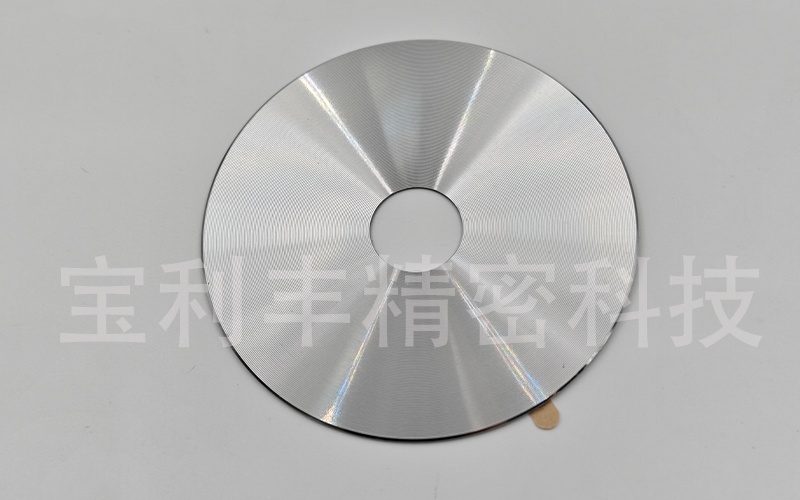
Relies on physical cutting with mechanical tools; produces the strongest 3D effect and a premium look. Commonly used for high-end nameplates, medals, and equipment identification.
Core Principle: A CNC system controls diamond or alloy tools to precisely mill the aluminum plate, creating recessed (intaglio) or raised (cameo) lettering.
Complete Process: Secure and level aluminum plate → Import font path programming → Precision milling of font outlines → Deburring and polishing → Optional color filling or anodizing.
Features: Extremely high precision, strong 3D effect, smooth edges (no jaggedness), and superior wear resistance; however, processing costs are high and speeds are slow, making it unsuitable for mass production.
4. Screen Printing (Flat printing; low-cost, high-volume)
A surface-level printing process with no tactile relief; the top choice for low-cost, high-volume nameplates.
Core Principle: Uses a custom screen stencil to apply specialized metal ink onto the aluminum surface, followed by high-temperature baking to cure the ink into the lettering.
Complete Process: Create screen stencil → Clean and dust aluminum plate → Apply ink through screen → High-temperature oven curing → Multi-color overprinting (if required).
Features: Vibrant colors, supports multi-color patterns, and very low unit cost; downsides include susceptibility to paint loss from friction or sun exposure (as the ink sits on the surface), making it suitable only for indoor, low-wear environments.
5. Stamped Embossed/Debossed Lettering (Mechanical forming; durable 3D lettering)
A purely physical mechanical process involving no ink or chemical treatments; results in highly durable lettering that will never detach.
Core Principle: Uses a custom steel die and a high-pressure stamping press to deform the aluminum plate locally, creating raised or recessed lettering.
Complete Process: Custom steel die fabrication → Position and secure aluminum plate → Stamping/forming → Leveling and deburring → Optional color filling for highlighting.
Features: Exceptional wear resistance, permanent lifespan, and very fast mass production speeds; significant limitations include suitability only for standard, bold fonts—it cannot produce fine, small text or complex patterns, offering limited design flexibility. 6. Thermal Transfer (High-Definition Color Graphics)
Specializes in high-definition color printing; suitable for personalized nameplates featuring patterns, gradients, or multi-color designs.
Core Principle: Graphics are printed onto a thermal transfer film; high-temperature heating causes the ink from the film to penetrate and bond with the aluminum surface.
Complete Process: Print graphics onto transfer film → Apply to aluminum surface → High-temperature heat-press curing → Peel off film and apply protective surface coating.
Characteristics: Rich colors, intricate patterns, no plate-making costs; moderate wear and weather resistance. Primarily used for decorative aluminum nameplates and creative signage; not suitable for industrial applications requiring high wear resistance.
Quick Guide to Process Selection
1. Industrial wear resistance & long-term use: Chemical etching (preferred);
2. Rapid customization & variable data: Laser marking (preferred);
3. High-end 3D texture & premium nameplates: CNC engraving (preferred);
4. High-volume, low-cost indoor use: Screen printing (preferred);
5. Standard large text & ultra-durable mass-produced parts: Embossing/Debossing (stamping) (preferred).